When NOT to Do a Knee Replacement: A Surgeon’s Honest View
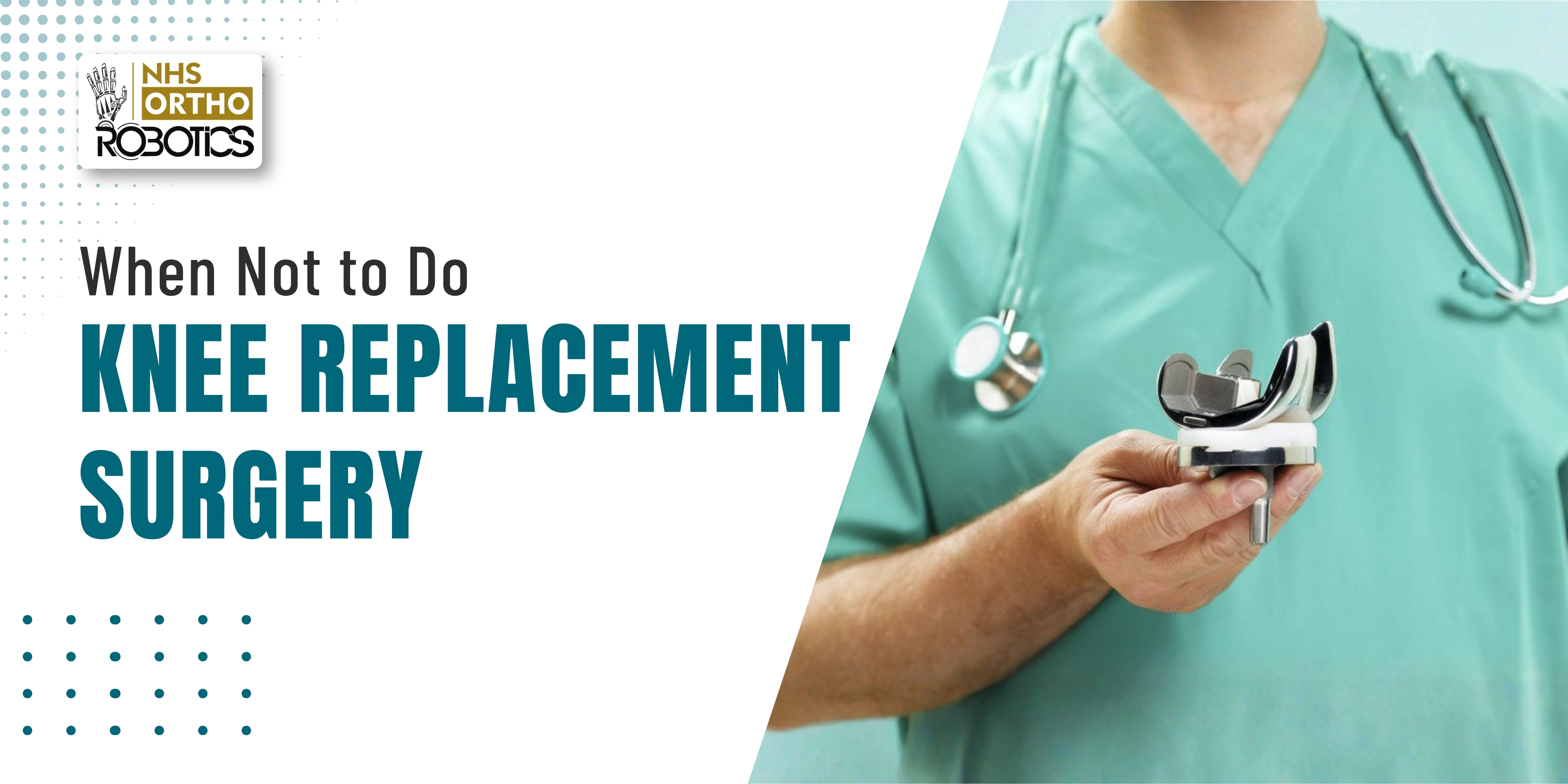
Core Takeaway: Knee replacement is an irreversible surgical procedure and should only be performed for genuine end-stage arthritis where non-surgical methods have failed, diagnosis is correct, and the patient is ready.
- Early-stage arthritis (Grade 1/2) is not suitable for replacement; preserving the natural joint is paramount.
- Non-surgical measures (physiotherapy, weight control, bracing, injections) must be exhausted first.
- Thorough examination is required to rule out referred pain originating from the hip or lower back.
- Patients must be medically optimized (e.g., blood glucose controlled) and mentally prepared before undergoing surgery.
You will not often hear a surgeon write an article about when not to operate. But I think it is one of the most important things I can tell my patients — and it sits at the very heart of how I practise.
In my clinic, a significant proportion of the patients who come in expecting to book knee replacement surgery leave without booking it. They came braced for an operation, and instead I sent them home with a different plan. This is not because I am turning away work. It is because a knee replacement is a wonderful operation for the right patient at the right time — and the wrong operation for everyone else.
Knowing when not to operate is, in my experience, just as much a mark of a good surgeon as knowing how to operate well. So let me be honest with you about the situations where I advise patients to wait, or to avoid surgery altogether.
"In my everyday practice at NHS Hospital Jalandhar, about 30% to 40% of the patients who consult me for knee pain are advised against surgery. Instead, we put them on structured rehabilitation, lifestyle management, or joint preservation pathways. I take pride in the fact that we say 'no' to surgery just as responsibly as we say 'yes' — because operating on a joint that doesn't genuinely require it is a disservice to the patient."
When the Arthritis Simply Isn’t Advanced Enough
The most common reason I advise against surgery is straightforward: the arthritis is not yet severe enough to justify replacing the joint.
Knee replacement is designed for end-stage arthritis — typically Grade 3 or 4 — where the cartilage is largely worn away and the joint is bone-on-bone. When a patient has early or moderate arthritis (Grade 1 or 2), there is still meaningful cartilage left, and that cartilage is worth preserving. Replacing a knee at this stage would be premature; we would be using up the lifespan of an implant when the natural joint still has good years left in it.
For these patients, the right path is to protect and support the natural knee for as long as possible — and there is a great deal we can do to achieve that.
When Conservative Treatment Hasn’t Been Properly Tried
This is a big one, and it is often overlooked.
Many patients arrive convinced they need surgery, but when I take their history, I find they have never had a proper, structured course of non-surgical treatment. They have taken some painkillers on and off, perhaps, but never committed to focused physiotherapy to strengthen the muscles supporting the knee, never addressed their weight, never tried appropriate injections, never used a brace where one might help.
Non-surgical treatment, done properly and given a fair chance, can significantly reduce pain and improve function — sometimes enough to postpone surgery by years, occasionally enough to avoid it altogether. I owe it to every patient to make sure these options have genuinely been exhausted before recommending an irreversible operation. Surgery should be the step we take when the alternatives have been tried and have stopped working — not the first thing we reach for.
Not sure whether you really need surgery?
This is exactly what a second opinion is for. Send me your reports and I’ll tell you honestly where you stand.
WhatsApp Your Reports Call +91 98142 09405 Book AppointmentWhen the Pain Isn’t Actually Coming From the Knee
This is one of the most important and most missed situations, and getting it wrong is a leading cause of failed surgery.
Knee pain does not always originate in the knee. Pain can be referred from the hip, or from the lower back where a nerve is being compressed. I have seen patients scheduled for knee replacement whose real problem was elsewhere — and had they been operated on, they would have woken up with a new knee and exactly the same pain.
This is why I am so careful about diagnosis. Before I ever recommend replacing a knee, I need to be certain the knee is genuinely the source of the pain. Examining the whole patient — the back, the hip, the nerves, the gait — not just the X-ray of the knee, is what prevents this expensive and distressing mistake.
When the Patient Is Not Medically Fit — Yet
Sometimes the knee genuinely needs replacing, but the timing is wrong because of the patient’s overall health.
Uncontrolled diabetes, an active infection somewhere in the body, significant heart or lung problems that make anaesthesia risky, or other unstable medical conditions can all make surgery inadvisable at that moment. The right course here is not to refuse surgery permanently, but to optimise the patient’s health first — get the diabetes controlled, treat the infection, stabilise the heart — and then reconsider surgery from a position of safety.
A good outcome depends on operating on a body that is ready for it. Rushing into surgery on an unprepared patient invites exactly the complications we work so hard to avoid.
When Expectations Don’t Match Reality
Occasionally I meet a patient whose knee would technically benefit from replacement, but whose expectations tell me to pause and have a longer conversation first.
A knee replacement reliably relieves arthritis pain and restores good function for everyday life. It is not designed to turn back the clock to a young, athletic knee capable of running marathons or playing high-impact sport. If a patient’s primary goal is something the operation cannot deliver, then proceeding without first aligning expectations is setting them up for disappointment — even if the surgery is technically perfect.
In these cases, the most useful thing I can do is have an honest conversation about what the operation will and will not achieve, before any decision is made.
When the Patient Simply Isn’t Ready
Surgery is a partnership. It requires the patient to be mentally prepared and committed to the recovery and rehabilitation that follow. A patient who is deeply anxious, unconvinced, or unable to commit to the physiotherapy will not get the best from even a perfectly performed operation.
There is no harm in waiting until a patient feels genuinely ready. I would rather a patient come to surgery with confidence and commitment than be rushed into it before they are prepared. The operation will be just as available when they are ready.
Why This Matters
You might wonder why a surgeon would spend so much time explaining when not to operate. The answer is simple: it is the foundation of trust.
When I tell a patient they need surgery, I want them to be able to trust that recommendation completely — and they can only trust my “yes” if they know I am equally willing to say “no.”
A surgeon who recommends surgery for everyone who walks in is not someone whose judgement you can rely on. A surgeon who sends patients home with non-surgical plans, who insists on certainty about diagnosis, and who waits until the timing is genuinely right — that is someone you can trust with the decision that does call for surgery.
The Bottom Line
Not every knee needs replacing. The right time for surgery is when the arthritis is genuinely advanced, the pain is truly limiting your life, non-surgical options have been properly tried and exhausted, the knee is confirmed as the real source of pain, and you are medically fit and personally ready.
When all of that lines up, knee replacement is one of the most life-improving operations in medicine, and I will tell you so clearly. But until it does, my honest advice may well be to wait — and that advice is given with exactly the same care as a recommendation to operate.
If you have been told you need a knee replacement and something about it doesn’t sit right, get a second opinion. You deserve to be certain.
Correct diagnosis | Clear guidance | Right decision